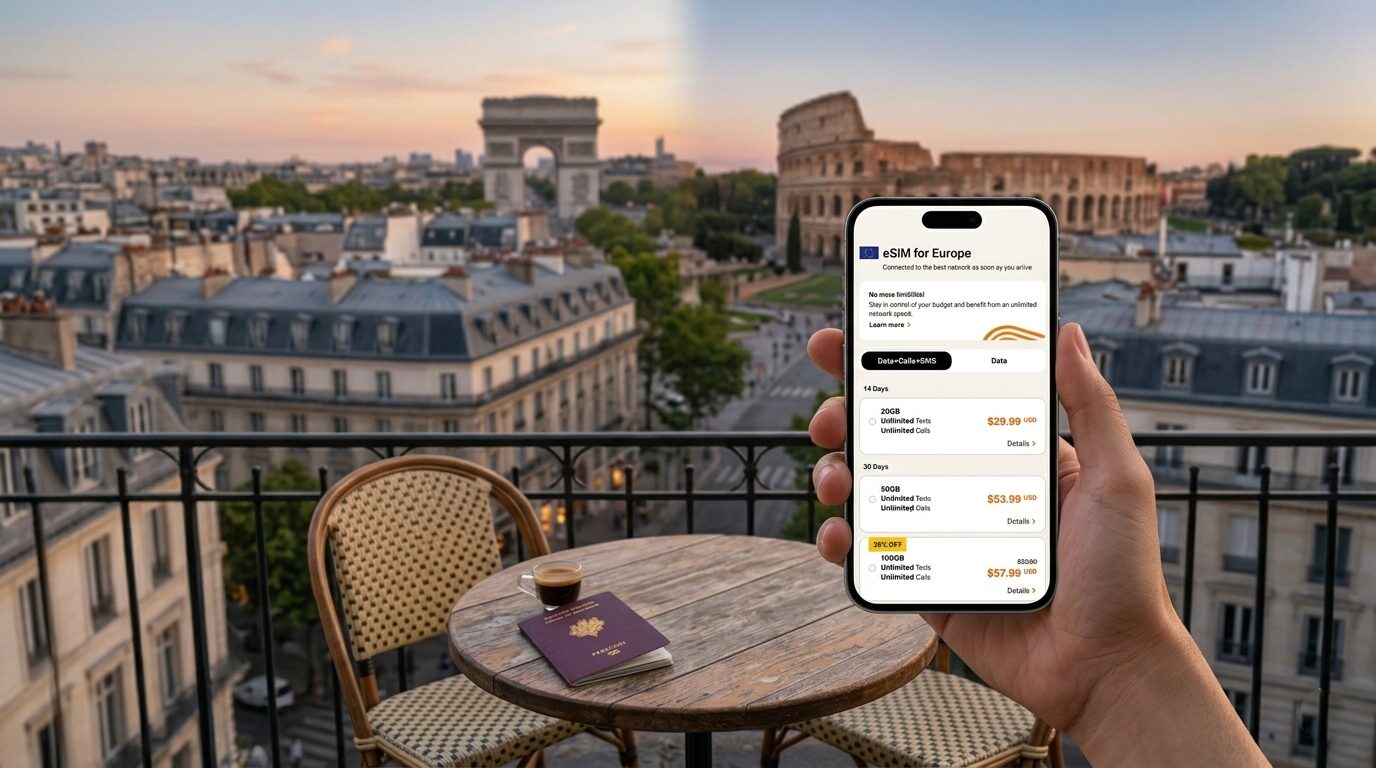
Global Roaming Solved The Best Travel eSIM for Instant Data Anywhere
You’re stepping off a plane in a new country, and within seconds, your phone connects to a local network. A travel eSIM is a digital SIM card you install before your trip, letting you instantly activate a local data plan without swapping physical cards. This avoids roaming fees and the hassle of finding a physical SIM vendor, giving you maps, messages, and apps immediately upon arrival.
What Is a Digital SIM Card and Why It Matters for Travelers
A digital SIM, or eSIM, is a tiny chip embedded directly in your phone that acts exactly like a physical SIM card, but without the plastic. For travelers, this means you can buy and activate a travel eSIM data plan entirely online before your trip. You never have to find a local store, swap tiny cards, or worry about losing your home SIM. Instead, you scan a QR code or install an app, and you’re instantly connected with local data upon arrival.
The real game-changer is that you can keep your primary home number active for calls and texts while the digital SIM handles all your cheap local data in the background.
It saves time, avoids the hassle of carrying multiple physical cards, and gives you seamless connectivity the moment you land.
Defining eSIM vs. Physical SIM: Key Differences
A physical SIM is a removable plastic chip you slot into your phone, tied to one carrier. An eSIM, or embedded SIM, is a digital profile soldered into your device, allowing you to download and switch carriers without handling a tiny card. For travelers, this means instant remote carrier switching—you can buy and activate a local data plan before your flight, then toggle between your home SIM and the travel eSIM via settings. No hunting for a shop, no risk of losing the tiny card. The key difference is flexibility: eSIM eliminates the physical swap.
Q: What is the biggest practical difference when traveling?
A: A physical SIM requires inserting a new card and storing your old one, while an eSIM lets you download a plan in seconds and keep your home number active simultaneously.
How Embedded SIMs Simplify Connectivity Abroad
An embedded SIM eliminates the need to source and swap plastic cards upon arrival in a new country. Travelers activate a local data plan for travel directly from their device’s settings, often before departure. This hardware-based approach ensures immediate connection to a regional network without visiting a kiosk or hunting for a store. Because the eSIM is soldered inside the phone, there is no risk of losing a tiny chip while juggling passports and boarding passes. The user simply selects a plan for their destination, the profile downloads securely, and roaming data begins working the moment the plane lands.

Who Benefits Most from Skipping the Plastic Card
The traveler who benefits most from skipping the plastic SIM card is the multi-country backpacker or remote worker moving between borders weekly. You avoid the hassle of sourcing and swapping physical chips in each new country—a process that risks losing the tiny card. Instead, you install a travel eSIM instantly. The sequence is clear:
- Purchase a regional or global plan before departure.
- Scan or download the eSIM profile via email or app.
- Activate it upon arrival without visiting a shop.
Someone on a tight multi-stop itinerary, such as a two-week European rail trip or a Southeast Asia loop, gains the most from this frictionless setup, as you keep your primary line active while roaming seamlessly.
Selecting the Right Data Plan for Your Journey
Selecting the right data plan for your journey depends on your destination’s network coverage and your usage habits. For a travel eSIM, prioritize plans offering local network partners at your specific destinations to avoid slow speeds. Estimate your daily data needs: light browsing and messaging require 1GB per week, while streaming or navigation needs 1GB per day. Common Q&A: How do I choose between a regional or local eSIM plan? Choose a regional plan if visiting multiple countries, as it covers a zone seamlessly; pick a local plan for better speeds and value in a single destination. Always verify the plan allows hotspot tethering if you need to share data with other devices.
Regional vs. Global Packages: Which Fits Your Route
Choosing between a regional or global travel eSIM comes down to your exact route. A regional package is perfect if you’re hopping between neighboring countries, like across Europe or Southeast Asia, often offering cheaper rates for a clustered zone. For a multi-continent trip—say, starting in Japan then flying to Brazil—a global plan simplifies everything with one flat rate. Here’s how to decide:
- List every country on your itinerary.
- Check if they fall under one regional zone.
- Pick a regional eSIM for that zone; otherwise, go global for seamless coverage.
Data Limits, Speeds, and Fair Use Policies Explained
Understanding travel eSIM data limits and fair use policies is crucial to avoid unexpected throttling. Most plans specify a high-speed data cap, after which speeds drop significantly, often to 128 kbps or less, making video streaming or large file transfers impractical. Fair use policies commonly enforce these limits to prevent network abuse, even on so-called “unlimited” plans. A 1GB plan may seem sufficient for maps and messaging, but it can vanish quickly during video calls or social media browsing. Always check whether your plan offers pure data, or if VoIP and tethering are restricted under its fair use terms, as these activities accelerate data consumption.
Prepaid Options Versus Pay-As-You-Go Flexibility
When choosing a travel eSIM, the core trade-off is prepaid data bundles versus pay-as-you-go flexibility. A prepaid plan locks in a set amount of data for a fixed price, perfect if your usage is predictable—like a 5GB package for a week-long city break. Pay-as-you-go, conversely, lets you top up in small increments, ideal for uncertain trips where you might use 500MB one day and 2GB the next. The latter avoids wasted credit but often costs more per gigabyte. Which option saves you more money on a long, unpredictable trip? Pay-as-you-go wins here, as you only pay for actual usage rather than an oversized bundle you might not finish.
Setting Up Your Device for Seamless Roaming
To unlock seamless roaming with your travel eSIM, begin by checking your device’s compatibility in settings. Before departure, ensure your device is carrier-unlocked and running the latest OS, then install the eSIM profile via the provided QR code or app. You must manually activate data roaming in your mobile network settings—this is non-negotiable. For added security, set your primary physical SIM as the default for calls only, designating the eSIM exclusively for data. This dual-SIM setup prevents unexpected charges while you enjoy instant connectivity upon landing, with no physical swap required.

Checking Smartphone Compatibility Before You Go
Before purchasing a travel eSIM, you must first confirm your smartphone is eSIM-compatible device and unlocked from your carrier. Check your phone’s settings under “Cellular” or “Mobile Data” for an “Add eSIM” option; if absent, your hardware likely lacks support. Verify your model against official lists—most iPhones from XS onward and Pixel devices from 3A support eSIM, but carrier-locked phones often block third-party profiles. Additionally, confirm your phone’s frequency bands match your destination’s networks to avoid connectivity gaps. A simple IMEI check on the eSIM provider’s site can confirm specific compatibility.
Step-by-Step Activation Without a Physical Swap
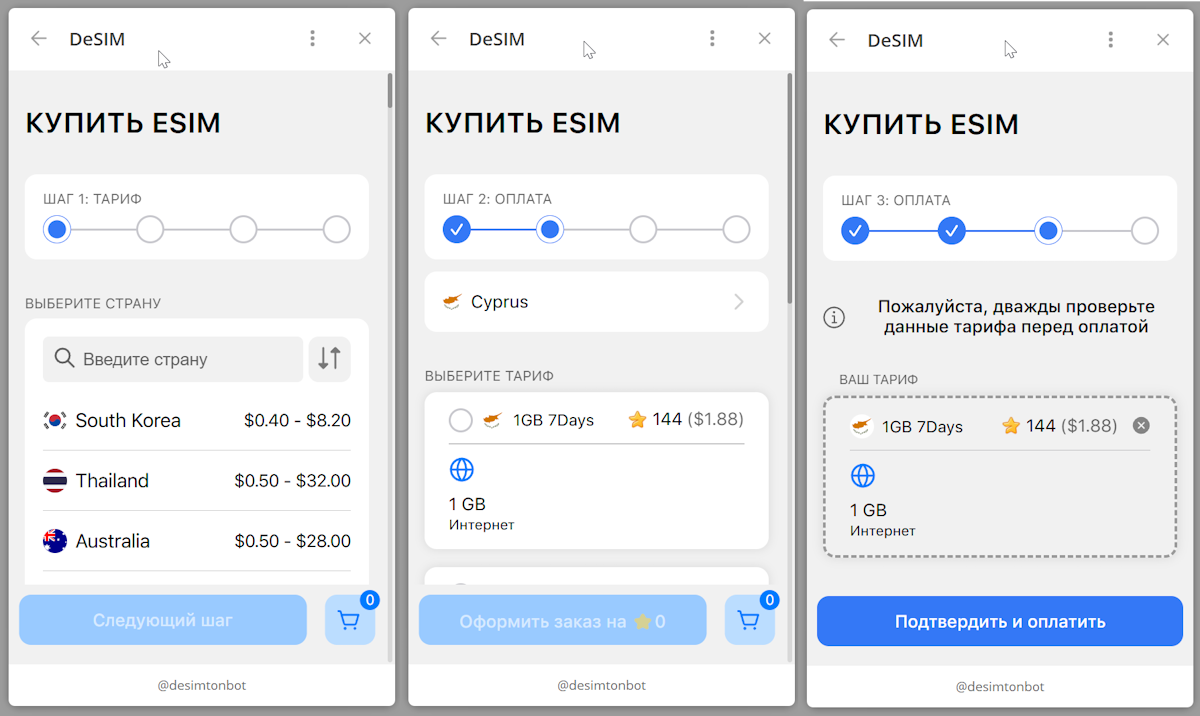
To activate your travel eSIM without a physical swap, Singapore eSIM first confirm your device is unlocked and compatible. On your phone, open Settings, tap Cellular or Mobile Data, then select “Add eSIM.” Scan the QR code provided by your eSIM provider or install via their app. Label this new plan as “Travel Data” to avoid confusion. Ensure your primary line remains active for calls, but set the travel eSIM as primary data source. Toggle data roaming on for this line. Finally, restart your device to apply changes. This process eliminates the need for a physical SIM card, offering instant connectivity upon arrival.
Step-by-step activation requires only a QR code scan and data roaming toggle—no physical swap needed.
Managing Multiple Profiles on One Handset
Managing multiple profiles on one handset is essential for seamless roaming, allowing you to store a travel eSIM alongside your primary home line without physical swaps. You can label each profile by destination or purpose, such as “Japan Data” or “Work Line,” and switch between them in your device settings when crossing borders. This setup keeps your home number active for calls or SMS while the travel eSIM handles data, preventing bill shock. Most modern smartphones support several eSIM profiles simultaneously, so you can preload plans for multiple countries before departure. Smart profile management ensures you never fumble with settings mid-trip, preserving connectivity and control.
Cost-Saving Strategies Beyond Traditional Roaming
Travel eSIMs unlock cost-saving strategies far beyond traditional roaming by letting you instantly compare and switch between local data packs from regional providers, bypassing your home carrier’s inflated daily fees. Instead of paying for a global pass, you can buy a country-specific plan for a fraction of the cost, then top up with tiny data-only bundles if you run low.
A key insight: use a multi-profile eSIM to stack a low-cost regional plan as your base, then activate a local eSIM for data-heavy needs—this hybrid approach slashes your per-gigabyte spend to cents.
You also save by preloading plans before departure, avoiding airport markups, and by disabling cellular data on your primary line entirely, ensuring every dollar goes to actual connectivity.
Comparing Prices Across Top Providers
When selecting a travel eSIM, price comparison across top providers is decisive. Operators like Airalo, Holafly, and Ubigi often display stark differences for the same destination. For a 10-day trip to Japan, a 10GB plan can range from $9 to $45, depending on data cap versus unlimited offers. You must compare not just the headline rate but what is excluded—some providers levy hidden fees for top-ups or throttle speeds after hitting a soft cap. A 5GB plan at one source might outpace an unlimited option elsewhere due to restrictive high-speed thresholds. Always calculate the true cost per usable gigabyte, not the advertised price.
Hidden Fees to Watch for in Fine Print
When selecting a travel eSIM, scrutinize the fine print for hidden data throttling policies. Many providers advertise “unlimited” plans but bury a Fair Usage Policy (FUP) that drastically reduces speed after a few gigabytes, rendering streaming impractical. Also watch for time-limited activation windows—some eSIMs expire if not installed within 30 days of purchase, with no refunds. Additionally, look for “session fees” or “connection charges” applied per device reboot or country switch, which inflate costs beyond the advertised rate. Question: Do eSIM “free” top-up credits expire? Yes, provider terms often stipulate bonus credits vanish within 90 days or upon plan deactivation, not rolling over to future purchases.
Combining Local Wi-Fi with Mobile Data
Combining local Wi-Fi with your travel eSIM is a smart way to stretch your data. Use a travel eSIM for on-the-go navigation or quick checks, but connect to café or hotel Wi-Fi for heavy tasks like streaming or uploading photos. To make this work, manually disable your eSIM data when on Wi-Fi to prevent background apps from switching over. A clear sequence helps:
- Turn off your eSIM data before connecting to a Wi-Fi network.
- Save maps or content offline while on Wi-Fi.
- Reactivate your eSIM only when you leave the Wi-Fi zone.
This way, you keep your prepaid data for moments when Wi-Fi isn’t an option.
Overcoming Common Hurdles While Abroad
Overcoming common hurdles while abroad often hinges on seamless connectivity, which a travel eSIM directly addresses. Avoid the scramble for local SIM cards upon arrival by activating your eSIM before departure, solving the immediate “no service” anxiety. If you face unexpected data caps, quickly purchase a top-up from the provider’s app rather than hunting for a physical store. Roaming charges disappear when you switch to a local eSIM plan, eliminating bill shock. For multi-country trips, a regional eSIM prevents the hurdle of swapping SIMs at every border; simply select the correct data profile from your phone settings. This preemptive strategy lets you navigate, translate, and call for help without interruption, turning a potential logistical headache into a smooth travel experience.
Network Coverage Gaps in Remote Destinations
Even with a travel eSIM, hitting a network coverage gap in a remote destination can leave you stranded without maps or translation tools. To stay connected, first download offline versions of your destination’s map and key phrases before you leave. When you arrive, manually check your eSIM’s partner network list—sometimes switching to a different local tower pops in a faint signal. If you’re hiking or driving, preload critical route data onto your phone while you still have strong coverage. Finally, carry a printed backup of essential bookings and emergency contact numbers, since no digital trick can fix zero signal.
- Download offline maps and phrase guides before departure.
- Manually scan available networks upon discovering a gap.
- Preload route data and accommodation details while you have a connection.
- Keep a printed emergency info sheet as a physical backup.
Troubleshooting Installation Errors Mid-Trip
If an eSIM fails to install mid-trip, begin by checking your device’s internet connection via Wi-Fi or another active SIM, as the profile download requires a stable link. Next, confirm the eSIM’s activation window has not expired, as some providers impose a short validity period after purchase. Manually scanning the QR code or pasting the confirmation code directly into your phone’s cellular settings can bypass corrupted auto-detection. For persistent failures, toggling Airplane Mode or restarting the device resets network handshakes. If the error remains, contact your eSIM provider’s 24/7 chat support for a manual profile reprovision, which pushes a fresh installation packet to your device. Avoid deleting the eSIM entirely unless instructed, as this can invalidate your purchase.
Most installation errors mid-trip stem from unstable connectivity or expired activation windows; restart the device, re-scan the QR code, or request a manual reprovision from the provider to resolve the issue.
Battery Drain and Tips to Extend Usage
Using an eSIM abroad often accelerates battery drain due to constant network scanning and background data sync. To extend usage, disable automatic carrier search by manually selecting a single network. Turning off Wi-Fi and Bluetooth when unused also conserves power, as does lowering screen brightness. Disabling background app refresh for non-essential apps can further reduce eSIM-related power draw. For sustained performance, prioritize power-saving travel eSIM settings:
- Switch to “Low Data Mode” in cellular settings
- Use airplane mode briefly in poor signal zones to prevent battery-draining reconnection attempts
- Close unused apps that persistently request data over the eSIM
Staying Secure and Private on Foreign Networks

Using a travel eSIM is a smart move for staying secure and private on foreign networks. Unlike public Wi-Fi, which can be easily intercepted, your eSIM creates a dedicated, encrypted mobile data tunnel back to your home carrier’s network. This means your passwords, messages, and browsing habits stay hidden from anyone snooping on the local infrastructure. You also avoid the physical risk of swapping out your primary SIM in a public place, which can expose your number to thieves. Just make sure to download your eSIM profile before you leave, so you’re not forced to connect to an insecure network to set it up. Turn off automatic Wi-Fi connections, and let your travel eSIM handle everything.
Encrypted Connections and VPN Integration
When using a travel eSIM, connecting to foreign Wi-Fi networks exposes your data to local interception. Encrypted connections, such as those provided by a VPN integration with your eSIM, create a secure tunnel for all device traffic. This prevents hotspot operators and ISPs from reading your browsing activity or capturing login credentials. The VPN should be activated before any network connection is established, ensuring no plaintext data leaks during the initial handshake. For maximum security, select a VPN that offers WireGuard or OpenVPN protocols, which maintain persistent encryption even on hostile public networks.
Risks of Public Hotspots vs. Personal Data Lines
Public Wi-Fi hotspots expose you to “man-in-the-middle attacks,” where hackers intercept your passwords and financial data over unencrypted networks. A travel eSIM’s personal data line avoids this entirely by routing your connection through a secure, private tunnel directly to the carrier. Unlike a café’s shared signal, your line can’t be spoofed with a fake login page or sniffed by nearby devices. You control the data path, keeping every transaction and login shielded from strangers on the same network.
- Hotspots lack encryption, letting attackers steal login credentials in plain text.
- Personal data lines create a direct, encrypted link, blocking interception.
- Fake “evil twin” hotspots mimic legitimate networks to harvest data; your eSIM line can’t be impersonated.
- Public Wi-Fi traffic is visible to the host and any user on the same channel—your private line remains isolated.
Safeguarding Banking Apps While Roaming
When roaming, your banking apps are extra vulnerable to public Wi-Fi snoops and sketchy hotspots. A travel eSIM helps by keeping you on a dedicated, encrypted data line instead of open networks. For safer mobile banking while abroad, always disable automatic Wi-Fi connections and only use your bank’s official app—never log in via a browser link sent in an email or text. Also, switch on biometric login (fingerprint or face ID) for an extra lock.
Q: Can a travel eSIM protect my banking login from hackers?
A: Not entirely—no SIM can block phishing. But it removes the risk of public Wi-Fi interception, so your credentials aren’t sent over a shared network where thieves can snatch them.
Real-World Use Cases Across Different Trips
For a weekend city break in Tokyo, a travel eSIM eliminates the need to hunt for pocket Wi-Fi upon arrival, allowing instant activation for Google Maps and restaurant reservations. On a multi-country European rail trip, switching between France, Germany, and Italy is seamless, as a single regional plan prevents the hassle of buying local SIMs at each border. For a two-week road trip across the US, an unlimited data eSIM supports constant navigation, music streaming, and finding last-minute hotels. During a business trip to London, a small data plan ensures reliable access to emails and messaging apps without roaming fees. For extended backpacking in Southeast Asia, a global eSIM with flexible top-ups provides connectivity across multiple nations, avoiding the need to register local cards in each country.
Backpackers Needing Constant Navigation
For backpackers navigating remote trails or unfamiliar cities, a travel eSIM eliminates the hunt for local SIMs when maps fail. Constant navigation demands uninterrupted real-time GPS access, which a travel eSIM provides via native data roaming on local towers. This prevents the critical pitfall of losing turn-by-turn directions mid-hike or in a labyrinthine market. To ensure seamless route-following, backpackers should:
- Verify eSIM coverage in their specific off-grid zones before departure.
- Download offline map sections via an app, using eSIM data only for live traffic or re-routing.
- Activate a multi-country plan to avoid regional interruptions during cross-border treks.
Only this setup keeps backpackers on the correct path without service gaps.
Business Travelers Requiring Reliable Calls
For business travelers, a travel eSIM ensures reliable call connectivity across borders without juggling physical SIM cards. Unlike data-only plans, voice-enabled eSIMs maintain clear calls for client meetings or remote team coordination, crucial when Wi-Fi is patchy. They bypass local carrier hurdles by instantly connecting to stable networks upon arrival, preventing dropped calls during negotiations. This reliability supports professional availability, whether for urgent conference calls or last-minute itinerary changes.
- Supports HD voice over LTE/5G for professional clarity
- Eliminates roaming tariffs that deter frequent calling
- Allows same-number reachability via eSIM call forwarding
Family Groups Sharing a Single Plan
For family trips, shared family eSIM plans let everyone stay online without juggling individual top-ups. You buy one data pool, then add each family member’s device to the same account. This keeps costs low because you share a single allowance instead of paying for separate plans. Kids can stream cartoons while parents navigate, and the data just deducts from one central bucket. Most providers let you monitor everyone’s usage from a single dashboard, so you see who is hogging the bandwidth. When the pool runs low, one top-up recharges the whole group instantly, no messing with multiple SIM cards or passwords.
| Aspect | Benefit for Families |
|---|---|
| Cost | One plan is cheaper than separate ones per person |
| Management | Top-ups and monitoring happen from one account |
| Flexibility | Data is shared, so heavy users don’t run out alone |
Future Trends in Mobile Connectivity for Globetrotters
Future trends in mobile connectivity for globetrotters will see travel eSIM technology enabling seamless, multi-network switching without physical SIM swaps. Travelers will benefit from instant, on-demand data plans that automatically connect to the strongest local tower, eliminating dead zones and roaming anxiety. Expect embedded profiles to support dozens of countries with a single activation, while real-time network aggregation will merge LTE and 5G bands for faster, more resilient connections. This evolution means globetrotters will enjoy uninterrupted video calls, navigation, and cloud access across borders, with no manual configuration or temporary numbers needed—just a stable, always-on link to their home services.
5G Expansion and Impact on Roaming Speeds
The global expansion of 5G networks is directly transforming roaming speeds for travelers using a travel eSIM. As more nations deploy standalone 5G infrastructure, roaming partners can now offer ultra-low latency connections that match local performance abroad. This eliminates the previous gap between home and roaming data rates, enabling seamless HD video calls and instant cloud access from airports or remote hubs. Travel eSIMs automatically prioritize 5G SA (Standalone) nodes where available, ensuring consistent high-speed roaming experiences without manual network selection. However, speed gains depend on the destination carrier’s backhaul capacity, not just the eSIM profile.
5G expansion bridges local and roaming speed tiers, turning travel eSIM data into a near-native experience with latency and throughput parity across borders.
Integration with Wearables and IoT Devices
Travel eSIMs enable seamless connectivity for wearable and IoT device roaming by provisioning a single data plan across multiple gadgets. A traveler can activate the eSIM on a smartwatch for GPS and notifications, while IoT devices like luggage trackers or portable translators connect independently. The setup follows a clear sequence: first, the primary smartphone downloads the eSIM profile; second, the profile is shared via QR code or app to paired wearables; third, each device authenticates on local networks without physical SIM swaps. This eliminates the need for separate local SIMs for each gadget, ensuring continuous data flow for all connected items during transit.
- Activate the eSIM on your primary smartphone.
- Share the profile with your smartwatch or IoT tracker via the carrier app.
- Each wearable independently connects to regional towers using the shared data allowance.
Regulatory Shifts Affecting Cross-Border Data
Regulatory shifts are tightening how travel eSIM providers manage user data across borders, directly impacting your privacy. Data localization requirements are emerging, meaning your connection history and personal details may be stored within specific jurisdictions rather than freely transferred. This affects latency and service continuity if your eSIM provider must route data through approved regional servers mid-trip. Additionally, evolving consent frameworks now require explicit opt-in for secondary data uses, such as analytics or fraud prevention, rather than blanket permissions. Q: How do these shifts affect my travel eSIM? A: They can dictate which virtual network operators your eSIM can roam onto, as providers must comply with local storage and processing rules, potentially reducing competitive roaming options.
What Exactly Is a Travel eSIM and How Does It Work
The Core Technology Behind Embedded SIMs for Roaming
How a Digital Profile Replaces a Physical Plastic Card
Why Your Phone Needs to Be eSIM-Compatible